
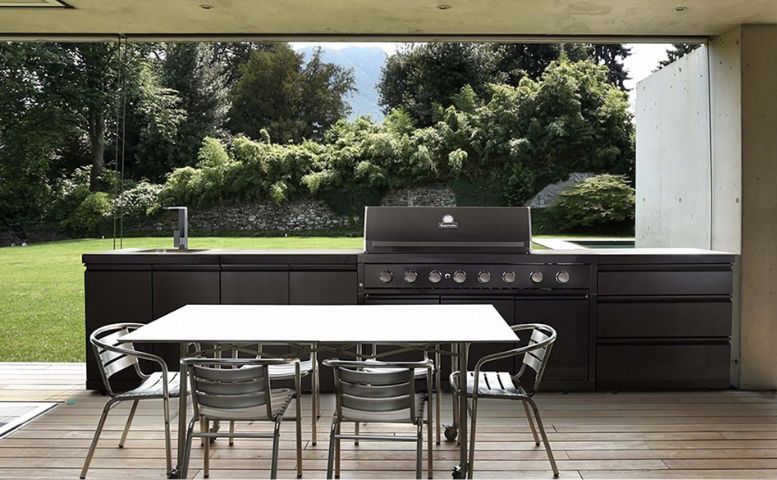
An outdoor kitchen will completely change your backyard. It will become a practical space for cooking & entertaining. Here, people can also enjoy time with family & friends. But this can be exposed to grease & food residue. Also, there can be rain, dust, sunlight & shifting weather. So, regular maintenance becomes important. A simple cleaning & protection routine preserves your appliances & bench tops. This can also save cabinets & cooking surfaces. Meanwhile, this will keep the area geared up for your next get-together.
Outdoor kitchens are exposed to many conditions. These indoor kitchens rarely experience. Moisture can cause corrosion. Grease & food residue can build up around cooking equipment. Dust, pollen & airborne salt may settle on stainless-steel surfaces.
Often, outdoor kitchen maintenance prevents grime. It won’t become hard to remove. This will allow you to spot problems. You can see rust & damaged seals. Plus, you can also see blocked burners or moisture damage early.
Cleaning BBQ components regularly is a great option. This gives the barbecue a more thorough clean & service each year.
Outdoor kitchen cleaning must start with areas mostly getting used. Particularly the BBQ, cooking plates & preparation surfaces need to be kept tidy.
The BBQ has to be cooled sufficiently. Then, you must remove food particles & excess grease from the cooking surface. Empty the drip tray. Then, you should wipe surrounding surfaces. You should use the best cleaner.
For stainless steel, use warm soapy water. Or you can take the help of a suitable stainless-steel cleaner. Try wiping in the direction of the grain. Avoid abrasive pads & steel wool. This is because they can scratch the surface. Such issues make it more susceptible to staining & corrosion.
You need to stick to the cleaning instructions. These are usually given with a specific appliance.
The materials used in outdoor kitchens Melbourne homes vary. Thus, cleaning methods should fit with the surface.
For stainless steel, regular wiping removes grease. This will also eradicate dust & salt deposits. Dry the surface after cleaning. This will cut water marks & staining.
Benchtops require material-specific care. Stone, porcelain, engineered surfaces, etc. may have unique cleaning & sealing processes. One must not use harsh chemicals. These can create a stain. And this’ll be very tough to remove.
Cabinet doors & handles should also be wiped regularly. This is mainly true for the BBQ, where grease is settling.
Do you know what the easiest way to save your investment is? You need to reduce its exposure to external elements.
A quality cover protects BBQ equipment. It will be protected from rain, airborne dirt, dust & salt. This is beneficial for outdoor cooking areas. These aren’t set beneath a lasting roof.
Many men say that keeping BBQs covered is important. House owners must also set up built-in units in the right undercover alfresco backdrop.
See if your outdoor kitchen includes refrigerators. It may also comprise sinks or other appliances. Check their individual care instructions. Don’t just assume every part can be fixed equally.
An easy schedule makes outdoor kitchen maintenance much simpler.
Weekly Tasks
Monthly Tasks
Often, deep cleaning & checking parts for damage/corrosion is crucial.
Seasonal weather changes make preventative care particularly useful for outdoor kitchens Melbourne. Are periods of heavy rain or extended non-use approaching? Then, you should clean the cooking equipment. Also, you must empty grease trays. Thus, you can make sure covers are safe.
After wet weather, inspect the cabinets & surrounding areas. This way, you can track trapped dampness. See if you notice swelling or corrosion. Be watchful for damaged seals or persistent dampness. This way, you can solve the problem. You don’t have to just hide it.
See if your outdoor kitchen is close to the coast. Then, you must pay more attention to salt deposits. This is because airborne salts cause stainless-steel staining & corrosion.
Don’t use the same cleaner on every surface. Stainless steel, stone, enamel, timber, etc. require different care.
Also avoid-
People are warned against steel wool. They also must avoid using abrasive pads & water onto electrical controls.
The best outdoor kitchen is not the one with good-looking appliances & finishes. It is one that remains clean. It also needs to be functional. It must be saved through regular use & altering weather.
You must wipe surfaces after use. Go for deep-cleaning cooking equipment. Also, opt for protecting stainless steel. House owners must check components. They need to cover devices when they are not being used. This way, they can make maintenance easier. And they will be able to save their investment.
A steady outdoor kitchen care routine means fewer unpleasant surprises. This is mainly important if you are setting up for your next outdoor get-together.
Contact Nick Daniels Heating, BBQ & Outdoor Mega Centre at (03) 93648018 today more info.
Wiping cooking & preparation surfaces after use is important. This gives the BBQ regular deeper cleaning. The exact frequency hinges on how often you cook. But too much use demands more often up keeping.
Try using warm soapy water. Or you can also go with a suitable stainless-steel cleaner. Use a soft cloth. Always wipe in the direction of the grain. You must skip steel wool or abrasive materials. These will scratch the surface.
It is safer to avoid directing high-pressure water at appliances. Also, don’t use water around electrical controls, burners, or sensitive parts. Use manufacturer-approved cleaning procedures for each device.
Regularly remove moisture, grease & salt deposits. Then, you need to keep stainless-steel surfaces clean & dry. Plus, you also need to use suitable covers. This must be followed if equipment is not in use. Early treatment of staining is important. This can prevent further corrosion.
It hinges on the countertop material. Some natural stone surfaces demand periodic sealing. Meanwhile, other materials may not. Stick to the manufacturer’s recommendations for the specific countertop. This way, you can do the best setup in your kitchen.